
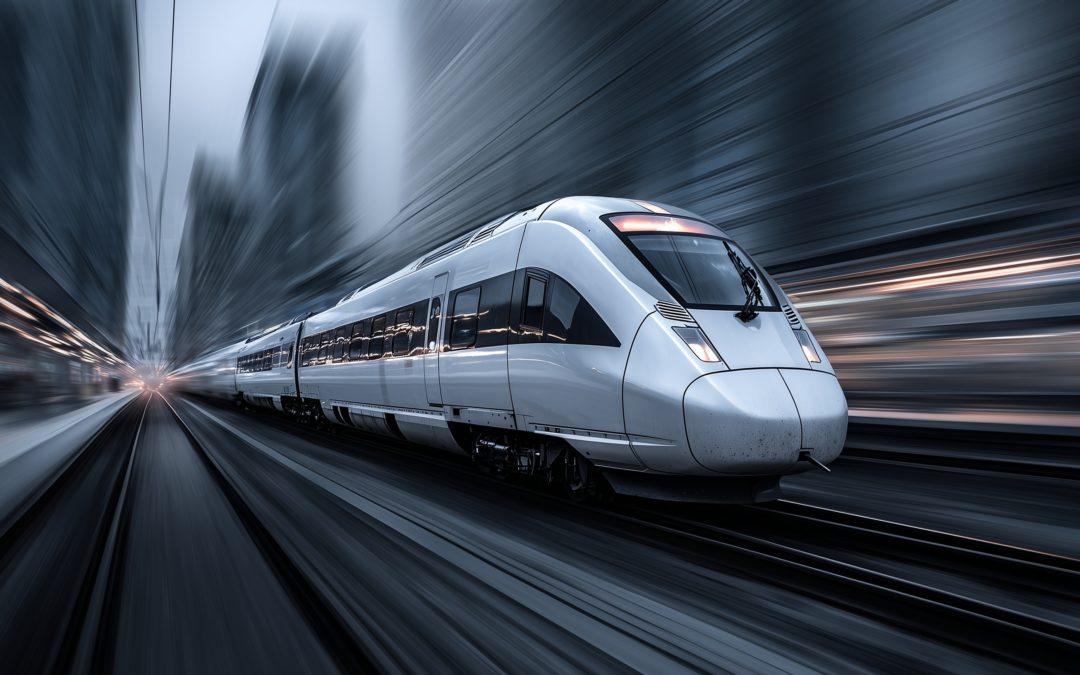
What role does the turbo play in modern rail transport?
The turbo in high-speed trains. When we think about high-speed trains, we usually picture aerodynamics, power, and precision. However, behind that performance there are less visible components that are truly decisive. Among them, the turbocharger plays a key role in many rail applications, especially in diesel locomotives and units operating under demanding conditions.
The turbo allows more air to enter the engine. As a result, combustion becomes more efficient and the train can deliver more power without requiring a disproportionate increase in engine size. In addition, this improvement translates into a stronger response during critical phases such as acceleration, load demand, or maintaining speed on challenging routes.
That is why talking about the turbo in high-speed trains is not just about a mechanical part, but about a direct ally in terms of performance, efficiency, and reliability.
More power with lower fuel consumption
One of the major challenges in the rail sector is moving more with less. In other words, achieving high performance without driving up fuel consumption or operating costs. In this context, the turbocharger offers a very clear advantage.
By compressing the intake air, the turbo improves engine combustion and allows each working cycle to be used more effectively. Consequently, the system generates more useful energy and reduces losses. This is especially valuable in trains that cover long distances, carry heavy loads, or need to maintain stable and continuous service.
Moreover, better engine efficiency also helps reduce emissions and optimize the machine’s overall behavior. Therefore, the turbo not only boosts power, but also supports sustainability goals and cost control.
Technical demands in high-speed trains
High-speed trains operate under very demanding conditions. Load variations, intensive working cycles, and the need to maintain consistent performance require every component to respond with precision.
In this environment, the turbocharger must withstand high temperatures, extremely high rotational speeds, and continuous changes in demand. In addition, it must do so without compromising safety or service continuity. For this reason, turbo maintenance in the rail sector requires technical expertise, diagnostic capability, and highly rigorous repair processes.
In fact, even a small deviation in turbocharger performance can end up affecting the engine’s overall output. Thus, detecting a loss of efficiency, premature wear, or an anomaly in working pressure in time makes a major difference in operations.
Operational reliability: a decisive factor.
In the railway sector, unplanned downtime has a direct impact on costs, schedules, and service quality. Therefore, reliability is not an extra, but a necessity. And here, the turbo once again plays a leading role.
A turbocharger in good condition helps maintain the expected power, stabilizes engine behavior, and reduces the risk of mechanical issues associated with poor combustion. Likewise, it helps extend the service life of other system components, since the entire unit operates under more balanced conditions.
Consequently, investing in inspection, maintenance, and specialized turbo repair is a strategic decision. It is not only about repairing a fault when it appears, but about preventing failures and ensuring train availability for longer periods.
The turbo in high-speed trains. Specialized repair.
Repairing a railway turbocharger is not just about replacing worn components. On the contrary, it involves analyzing the actual condition of the unit, identifying the root cause of the problem, and restoring the turbo to its optimal operating parameters.
To achieve this, it is essential to rely on specialized workshops, qualified technical staff, and precise balancing and testing equipment. In addition, every intervention must comply with the manufacturer’s specifications and the specific demands of the railway application.
In this sense, a properly executed repair improves performance, reduces risks, and prevents repeated failures. In the same way, it gives the operator greater control over maintenance costs and fleet planning.
The turbo in high-speed trains. The future.
Rail transport continues to evolve toward more efficient, sustainable, and technologically advanced models. Along this path, the turbocharger will continue to be an essential element in many high-performance platforms and engines.
As the sector demands greater energy efficiency and lower environmental impact, the role of the turbo will become even more relevant. In addition, maintenance digitalization and predictive diagnostics will open new opportunities to anticipate failures and optimize every intervention.
Ultimately, the turbo in high-speed trains not only powers engines, but also drives the competitiveness of the railway system. And precisely for that reason, taking care of its performance means taking care of reliability, efficiency, and the future of rail transport.