
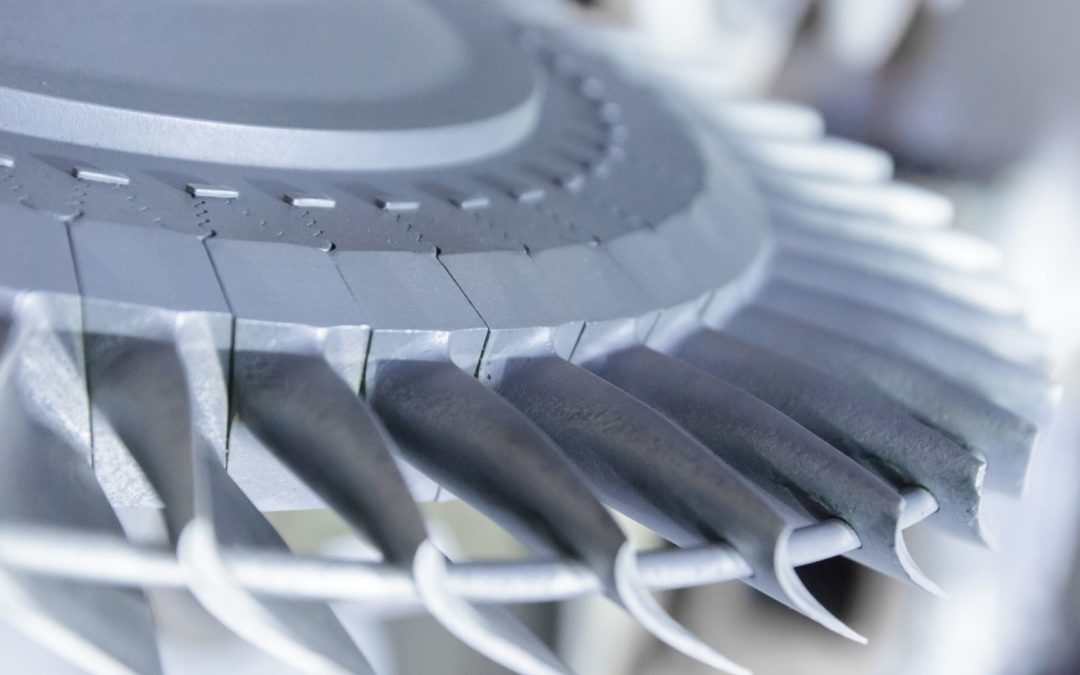
Fine geometry adjustments in turbochargers. Precision that drives efficiency
In the marine, rail, and industrial sectors, every detail matters. Fine geometry adjustments in turbochargers have become a decisive factor in optimizing engine performance. This process not only enhances energy efficiency but also extends equipment lifespan and reduces fuel consumption — all crucial aspects in industries where reliability and operational economy make the difference.
What does adjusting turbocharger geometry mean?
Geometric adjustment involves precisely calibrating the turbocharger’s moving parts — such as turbine or compressor blades — to achieve the ideal airflow according to operating conditions. In variable geometry models (VGT or VNT), this regulation allows the turbo to dynamically adapt to different engine speeds, maintaining optimal boost pressure at all times.
Advantages of precise adjustment
A properly adjusted turbocharger offers multiple benefits. First, it improves engine response at low RPMs, resulting in smoother acceleration. It also reduces pollutant emissions, since combustion becomes more complete. Additionally, it decreases mechanical stress on internal components, helping prevent premature failures. In demanding environments like marine propulsion or cogeneration, these advantages directly translate into greater operational performance and cost savings.
Advanced calibration technology and tools
Specialized workshops use laser measurement systems and dynamic calibration benches that enable micrometric precision adjustments. With these tools, each turbocharger is guaranteed to meet — or even exceed — the manufacturer’s original specifications after repair or reconditioning. At Turbo Internacional, for example, this process is an essential part of every scheduled maintenance or retrofit service.
Applications across different sectors
Fine geometry adjustments are crucial in turbochargers installed in ships, trains, and cogeneration plants. In the marine industry, they ensure continuous power from main and auxiliary engines. In the rail sector, they allow for more stable and efficient power delivery. And in cogeneration, they optimize energy recovery, enhancing the system’s overall thermal efficiency.
Fine geometry adjustments in turbochargers. Precision for a more efficient future
Ultimately, fine geometry adjustments are not just a technical service — they represent an investment in reliability, performance, and sustainability. With the right expertise and cutting-edge calibration technology, every turbocharger can be tuned to its optimal operating point.
At Turbo Internacional, you’ll find a team specialized in the maintenance, repair, and reconditioning of ABB turbochargers for ships, trains, and cogeneration plants.
Contact us today and discover how to boost your engine performance with precision and confidence.