
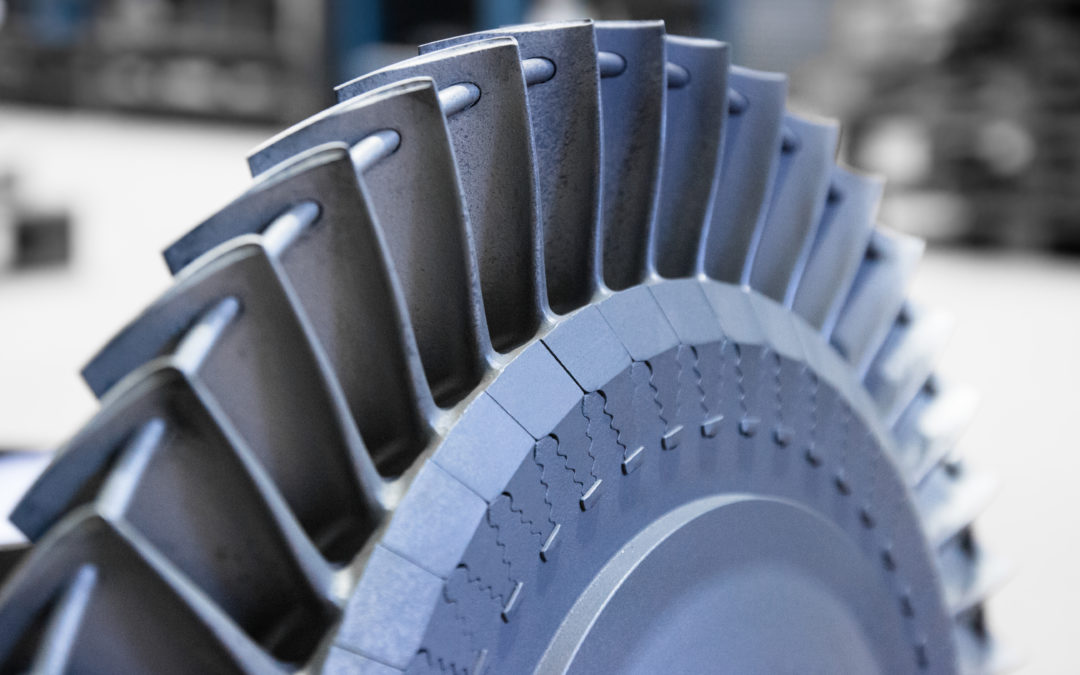
Why blades are the “red line” for performance
Turbine blades: Maintenance. Turbine blades operate in an extreme environment: high temperatures, particle-laden gases, and rotational speeds that don’t forgive mistakes. So, when blade condition deteriorates, you feel it immediately in efficiency, fuel consumption, and overall response. In addition, a small erosion spot today can turn into vibration, sealing losses, and—at worst—major damage to the rotor and casing assembly.
Common failures: what you want to catch early
In day-to-day operation, the same patterns show up again and again: leading-edge erosion, deposits (fouling) that alter the airfoil profile, high-temperature corrosion, thermal fatigue cracks, and FOD damage (foreign object damage). For example, an imbalance caused by deposits doesn’t just reduce performance—it also accelerates bearing wear and increases vibration levels.
Practical inspection: what to look for and how
Method matters here. First, carry out a visual inspection with proper lighting: edges, tips, and the root area. Then, when applicable, use borescope inspection to check inaccessible zones. Next, verify clearances, rub marks, and any discoloration that may indicate overheating. In parallel, correlate the data: EGT trends, pressure, flow, and vibration; that way, inspection isn’t just “by eye,” but based on real symptoms.
Cleaning and restoration: less is more, but do it right. Turbine blades: Maintenance
Cleaning must respect both the base material and any protective coatings. Therefore, avoid “home-made” approaches: follow OEM procedures, use compatible products, and control exposure times. In marine applications, salt and particles can form hard deposits; however, being too aggressive can round off profiles or lift coatings. When damage is minor, professional refurbishment (within tolerances) can restore geometry and balance; if not, replacement is the safer route.
Assembly and balancing: the detail that prevents trouble. Turbine blades: Maintenance
A perfect blade installed poorly is a guaranteed problem. Check torque settings, orientation, fasteners, and dynamic balancing when required. In addition, inspect the whole assembly: if there is rubbing or misalignment, the blade is usually the first component to “pay the price.” After installation, a functional run with vibration and temperature logging helps confirm everything is within limits.
Maintenance planning: habits that extend service life
The key is combining preventive and predictive maintenance: scheduled inspections, cleaning at sensible intervals, and trend analysis. As a result, you reduce unplanned downtime and improve cost per operating hour. If your unit runs in harsh conditions (ports, dust, variable fuels), shorten intervals and prioritize monitoring. Finally, document every intervention: what you measure and compare is what you truly improve.