
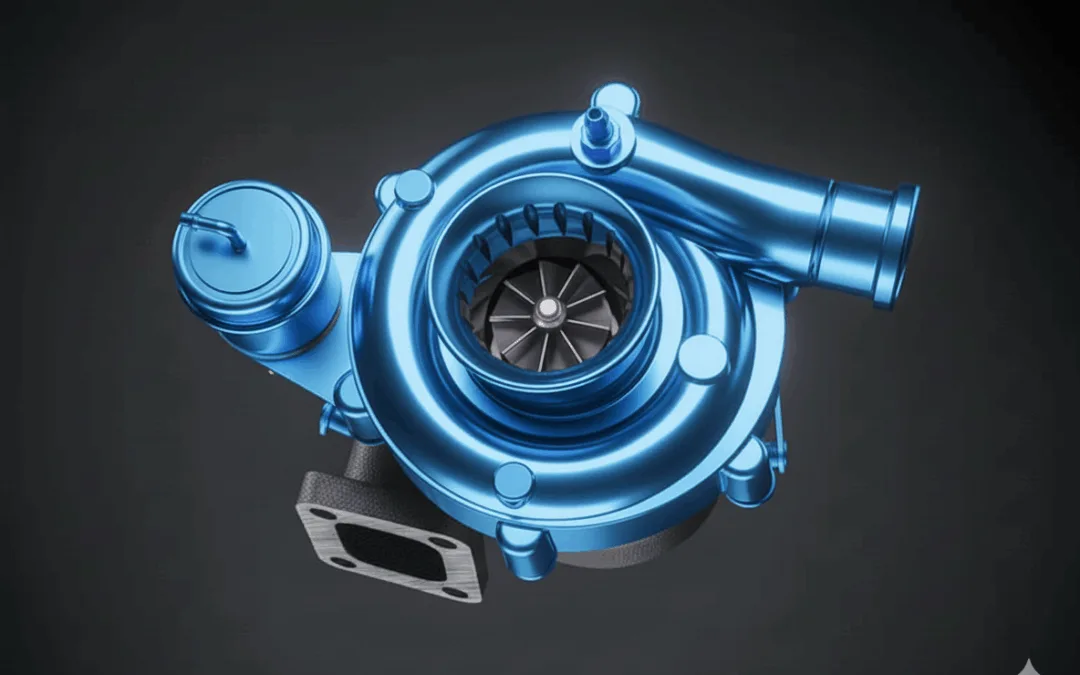
When should you replace the turbocharger?
Early warning signs you shouldn’t ignore
When should you replace the turbocharger?. If you notice a loss of power, increased fuel consumption, or bluish smoke, it’s time to check. In addition, unusual whistling when accelerating often indicates shaft play. On the other hand, the warning light and over/under-boost codes confirm that something isn’t right. Therefore, the sooner you diagnose the issue, the lower the risk of a catastrophic failure.
Natural wear vs. critical failure
With operating hours, every turbocharger suffers from erosion, thermal fatigue, and axial play. However, “normal” wear allows for scheduled reconditioning. In contrast, cracks in the housing, rotor-to-housing contact, or severe blade damage require immediate replacement. In fact, once the rotor has touched the housing, the metallurgical integrity is compromised.
Technical criteria for deciding on replacement
First, measure radial and axial clearances against OEM specifications. If they’re out of tolerance and cannot be repaired, replacement is necessary. Also, evaluate boost pressure, exhaust temperature, and vibration: increasing trends despite cleaning and balancing often signal an upcoming failure. Therefore, if the overhaul cost exceeds 60–70% of a new or remanufactured turbo, replacement is the most rational decision.
Root causes that lead to replacement. When should you replace the turbocharger?
Lack of lubrication, particle contamination, and hot shutdowns are the three classic enemies. Likewise, alternative fuels (LNG, methanol, biogas) introduce new corrosion and fouling patterns that, if not properly managed, reduce service life. Consequently, if root causes persist, a repaired turbo will fail again. Finally, adapt filters, maintenance intervals, and start/stop procedures to protect your investment.
Ideal timing by application: marine, rail, and cogeneration. When should you replace the turbocharger?
In marine propulsion, the optimal window is during dry-dock or a planned touch-and-go, minimizing off-hire time. Additionally, for onboard auxiliary engines, it’s advisable to synchronize with generator overhauls. In locomotives, the best time is before high-demand campaigns; otherwise, the cost of an idle train increases significantly. In cogeneration plants, take advantage of scheduled shutdowns and coordinate with engine, heat exchanger, and aftercooler maintenance. Ultimately, planning based on asset availability is just as important as the turbo’s condition.
How to execute a safe and cost-effective replacement
Before replacing, close the diagnostic loop with borescope inspection, oil analysis, and vibration testing. Also, validate OEM/ABB references, housing A/R compatibility, gasket kits, and actuators. Moreover, demand two-plane dynamic balancing and a test certificate. This ensures proper alignment and prevents leaks or overspeeding at startup. Finally, record baseline parameters (boost, EGT, filter ΔP) to compare after commissioning.
If, after all this, you need expert support, Turbo Internacional can help you decide between repair, retrofit, or complete replacement, offering quick response for ships, trains, and cogeneration plants. Contact us at turbointernacional.com and optimize your uptime with confidence.
Replacing a turbocharger isn’t just “changing a part.” It’s a technical and economic decision based on tolerances, performance trends, and operating context. Therefore, when symptoms persist and limits are exceeded, timely replacement protects the engine, reduces OPEX, and ensures continuous operation.